
What Actually Happens to Your Nervous System in a Cold Plunge
Cold plunging has gone from niche recovery tool to mainstream ritual — but a lot of what circulates about it online is more vibes than evidence. Before you associate three minutes in 50°F water with a cure-all, it's worth asking a more useful question: what is actually happening in your body, and what does the research support?
The Nervous System Response: What the Research Shows
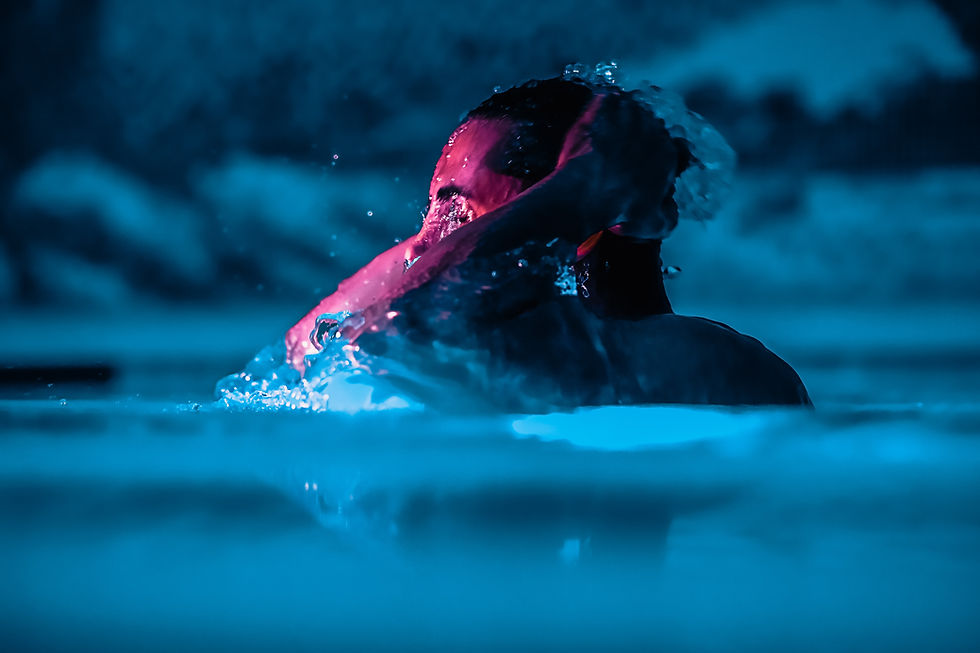
Cold water immersion triggers a sharp activation of your sympathetic nervous system — the "alert and respond" side of your autonomic nervous system. The clearest evidence comes from a landmark physiology study that measured blood hormone levels during controlled cold water immersion at different temperatures. At the coldest temperature tested (57°F / 14°C), researchers recorded norepinephrine increases of roughly 530% above baseline, alongside a five-fold rise in dopamine — among the largest acute catecholamine responses ever documented from a non-drug intervention [1][2].
Norepinephrine and dopamine are both tied to alertness, focus, and mood regulation. That's the mechanism behind the "reset" feeling people report after a plunge — it's a real, measurable neurochemical event, not a placebo effect.
The second piece is nervous system training, not just triggering. Repeated, controlled cold exposure asks your body to activate the sympathetic (stress) response and then recover into the parasympathetic (rest) state shortly after. Practiced consistently, this back-and-forth is thought to build what physiologists call autonomic flexibility — your capacity to move between stress and recovery states efficiently, rather than staying stuck in one [3].
What About Inflammation and Muscle Recovery?
This is where it's worth being precise, because the research is more mixed than most cold plunge marketing suggests.
Older studies and general fitness culture treat cold water immersion as a straightforward inflammation-reducer. The more current picture is more nuanced: a 2018 randomized controlled trial found that multiple cold water immersions reduced visible muscle damage markers, but did not significantly change systemic inflammation or speed up muscle function recovery compared to control [4]. A 2025 network meta-analysis looking specifically at dosing found that protocol matters — medium-duration, colder immersion (10–15 minutes at roughly 41–50°F) was most associated with improved biochemical recovery markers, while slightly warmer medium-duration immersion (roughly 52–59°F) was more associated with reduced perceived soreness [5].
In short: cold plunge can be a legitimate part of a recovery routine, and the dose (time and temperature) genuinely matters — but it isn't a guaranteed fix for every marker of exercise recovery, and anyone telling you otherwise is oversimplifying the evidence.
Why Dosing Matters More Than Toughing It Out
A consistent theme across the research: the benefit comes from controlled, brief exposure — not from how much discomfort you can endure. Most of the physiological benefit shows up within the first few minutes; pushing past that point mostly adds risk without adding measurable upside [3][5]. This is part of why a guided, supervised setting matters — dosing it correctly is the difference between a productive nervous-system training session and just being cold.
Why This Matters More in South Texas
Recovery culture in the Rio Grande Valley runs against a specific backdrop: long stretches of heat, high humidity, and an active local community — from weekend athletes to service industry workers on their feet all day — that doesn't have much built-in nervous system "off switch." Cold exposure is one of the few tools that works precisely because it's the physiological opposite of the environment most of us live in day to day.
What a Session Actually Looks Like at Onyx Recovery
At Onyx, cold plunge sessions are structured around the dosing research above, not endurance bragging rights — short, supervised immersions with guidance on breathing and pacing, built into a broader recovery routine alongside modalities like infrared sauna and compression therapy. It's a process, not a performance.
If you want to see the specifics — session length, facility details, and how to book — that lives on our cold plunge service page: [LINK PLACEHOLDER — insert Onyx cold plunge service page URL here].
This article is for general educational purposes and reflects a summary of published research. It is not medical advice and does not replace guidance from a licensed healthcare provider, particularly if you have a cardiovascular condition or are pregnant — both are contraindications commonly noted for cold water immersion.
References
Šrámek, P., et al. (2000). Human physiological responses to immersion into water of different temperatures. European Journal of Applied Physiology, 81(5), 436–442. PubMed
Change in sympathetic activity, cardiovascular functions and plasma hormone concentrations due to cold water immersion in men. PubMed
Scientific Evidence-Based Effects of Hydrotherapy on Various Systems of the Body. PMC. PMC4049052
Multiple Cold-Water Immersions Attenuate Muscle Damage but not Alter Systemic Inflammation and Muscle Function Recovery: A Parallel Randomized Controlled Trial. Scientific Reports. Nature
Impact of different doses of cold water immersion (duration and temperature variations) on recovery from acute exercise-induced muscle damage: a network meta-analysis. Frontiers in Physiology (2025). Frontiers


Comments